Technical Whitepaper: Ensuring Signal Integrity in MRI Suites via 3kV Galvanic Isolation
I. Executive Summary
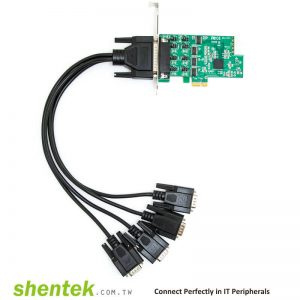
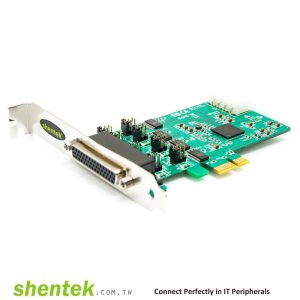
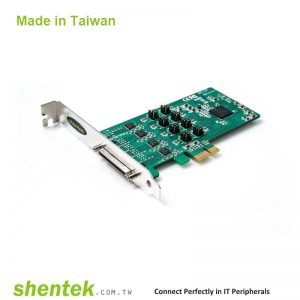
The rapid evolution of diagnostic imaging, particularly within high-tesla Magnetic Resonance Imaging (MRI) environments (3T to 7T), presents an unprecedented challenge for data communication. The Shentek 58015 4-port RS-422/485 PCIe card is engineered to bridge the gap between high-performance computing and hostile electromagnetic clinical spaces. By integrating 3000V RMS galvanic isolation, the 58015 mitigates common-mode noise, eliminates ground loops, and ensures compliance with the stringent IEC 60601-1 medical standards, securing the data integrity of critical surgical and monitoring systems.
II. The Physics of Interference in MRI Environments
2.1 The Electromagnetic Landscape
MRI suites are among the most electromagnetically complex environments in a hospital. Three primary components contribute to signal degradation:
-
Static Magnetic Field ($B_0$): High-strength fields that can affect ferromagnetic components.
-
Gradient Fields ($dB/dt$): Rapidly switching magnetic gradients that induce eddy currents in nearby conductors.
-
Radio Frequency (RF) Pulses ($B_1$): High-frequency pulses that act as potent sources of Radio Frequency Interference (RFI).
2.2 Common-Mode Voltage (Vcm) and Differential Signaling
While RS-422 and RS-485 are inherently robust due to their differential signaling nature, they are not immune to high Common-Mode Voltage (Vcm). In an MRI suite, the fluctuating magnetic fields can induce a voltage potential between the ground of the MRI equipment and the ground of the medical server in the control room. If this potential exceeds the transceiver’s maximum rating (typically -7V to +12V), data corruption or hardware latch-up occurs.
III. Shentek 3kV Galvanic Isolation Architecture
The Shentek 58015 utilizes a sophisticated Galvanic Isolation Barrier. This barrier ensures that there is no direct electrical conduction path between the external RS-422/485 bus and the sensitive PCIe host interface.
3.1 Optical vs. Digital Isolation
The 58015 leverages high-speed digital isolators that utilize micro-transformer or capacitive coupling technology, achieving 3000V RMS isolation. Unlike traditional optocouplers, these components offer:
-
Lower Propagation Delay: Critical for real-time surgical feedback.
-
Higher CMTI (Common-Mode Transient Immunity): Rated for $>50\text{ kV/μs}$, ensuring stability during rapid MRI gradient switching.
IV. Technical Confrontation: Common Mode vs. Differential Mode Noise
In industrial and medical communication, the distinction between these two noise types is vital for troubleshooting:
-
Differential Mode Noise: Noise that appears on one signal line with respect to the other. RS-485 cancels this through twisted-pair cabling.
-
Common Mode Noise: Noise that appears on both signal lines simultaneously with respect to the ground.
-
The Shentek Solution: By floating the transceiver side of the 58015, the common-mode noise sees an infinite impedance path to the host ground, effectively neutralizing it before it reaches the UART.
-
V. Next-Generation OS Compatibility: Windows 11 & Windows 12
As medical infrastructures upgrade to Windows 11 (24H2) and the upcoming Windows 12, security protocols such as HVCI (Hypervisor-Protected Code Integrity) become mandatory.
-
Driver Integrity: The 58015 drivers are signed with the latest Microsoft HLK (Hardware Lab Kit) requirements, ensuring they can reside in the secure kernel memory without being blocked by memory integrity protections.
-
Low Latency: Optimized for the Windows 12 scheduler, the 58015 reduces interrupt latency, which is paramount when synchronizing MRI pulse sequences with external triggers.
VI. Compliance with International Standards
The 58015 is designed with IEC 60601-1-2 (4th Edition) in mind, focusing on the Electromagnetic Compatibility (EMC) of medical electrical equipment.
| Standard | Description | Shentek 58015 Status |
| IEC 60068-2 | Shock & Vibration | Certified for Medical Carts |
| EN 55011 | Industrial, Scientific, and Medical (ISM) RF | Class B (Low Emission) |
| ISO 15022 | Galvanic Isolation | 3kV RMS / 60 Seconds |
VII. Expert FAQ: Addressing Clinical Procurement Concerns
Q1: Will the isolation impact the data throughput for high-resolution sensor arrays?
A: No. The 58015 supports baud rates up to 921.6 Kbps per port. The isolation barrier is transparent to the data flow, adding less than 40ns of propagation delay, which is negligible for RS-422/485 protocols.
Q2: How does the card handle power surges during MRI emergency quenches?
A: The card features integrated TVS (Transient Voltage Suppressors) on every port, capable of shunting 600W of peak pulse power, protecting the isolation barrier from catastrophic failure.
Q3: Can the 58015 operate in a 24/7 critical care monitoring environment?
A: Yes. With an MTBF (Mean Time Between Failures) exceeding 200,000 hours and an industrial-grade temperature range, it is designed for zero-downtime medical applications.
VIII. Conclusion
For medical OEMs and hospital IT integrators, the choice of serial communication hardware is a choice of system reliability. The Shentek 58015 provides more than just ports; it provides a fortified barrier against the chaotic electromagnetic environment of the MRI suite. As we transition into the era of Windows 12 and 7T imaging, the 3kV isolation and HVCI-ready architecture of the 58015 remain the gold standard for medical data integrity.